
Overview
This article provides a comprehensive overview of effective real-time threat detection solutions that tackle the pressing challenges of contemporary cybersecurity. It underscores the capabilities of various solutions, including those from JSOC IT and Darktrace, emphasizing their strengths in:
- Proactive monitoring
- AI integration
- User behavior analytics
These integrated solutions collectively empower organizations to swiftly detect and respond to cyber threats, significantly enhancing their overall security posture and ensuring compliance. By adopting these advanced technologies, businesses can fortify their defenses against the evolving landscape of cyber threats, ultimately safeguarding their critical assets.
Introduction
As cyber threats grow increasingly sophisticated and pervasive, the demand for effective real-time threat detection solutions has reached unprecedented heights. Organizations now face the challenge of navigating a complex landscape where the rapid identification and response to vulnerabilities are crucial for safeguarding sensitive information. This article explores ten innovative solutions that empower businesses to enhance their cybersecurity posture, providing insights into how these technologies can mitigate risks and streamline incident response. With a plethora of options available, how can organizations discern which solutions are best suited to their unique challenges and needs?
JSOC IT: Integrated Real-Time Threat Detection and Response Solutions
JSOC IT's 'Post-Security' model seamlessly integrates real-time threat detection solutions with incident response, empowering businesses to respond swiftly to emerging threats. Their 24/7 monitoring services harness advanced analytics to proactively detect vulnerabilities, significantly mitigating the risk of exploitation. This proactive defense mechanism not only fortifies protection but also ensures , making it particularly advantageous for sectors such as financial services and healthcare.
Clients have reported a remarkable transformation in their security posture, with many experiencing a 40% reduction in breach response times, effectively minimizing potential damages. Furthermore, JSOC IT offers a flat-rate service devoid of hidden fees, facilitating predictable budgeting for businesses.
As the cybersecurity landscape continues to evolve, the necessity for comprehensive solutions, particularly real-time threat detection solutions like those provided by JSOC IT, becomes increasingly evident, underscoring the critical need for continuous monitoring and adaptive strategies in safeguarding sensitive information.

Darktrace: AI-Powered Real-Time Threat Detection
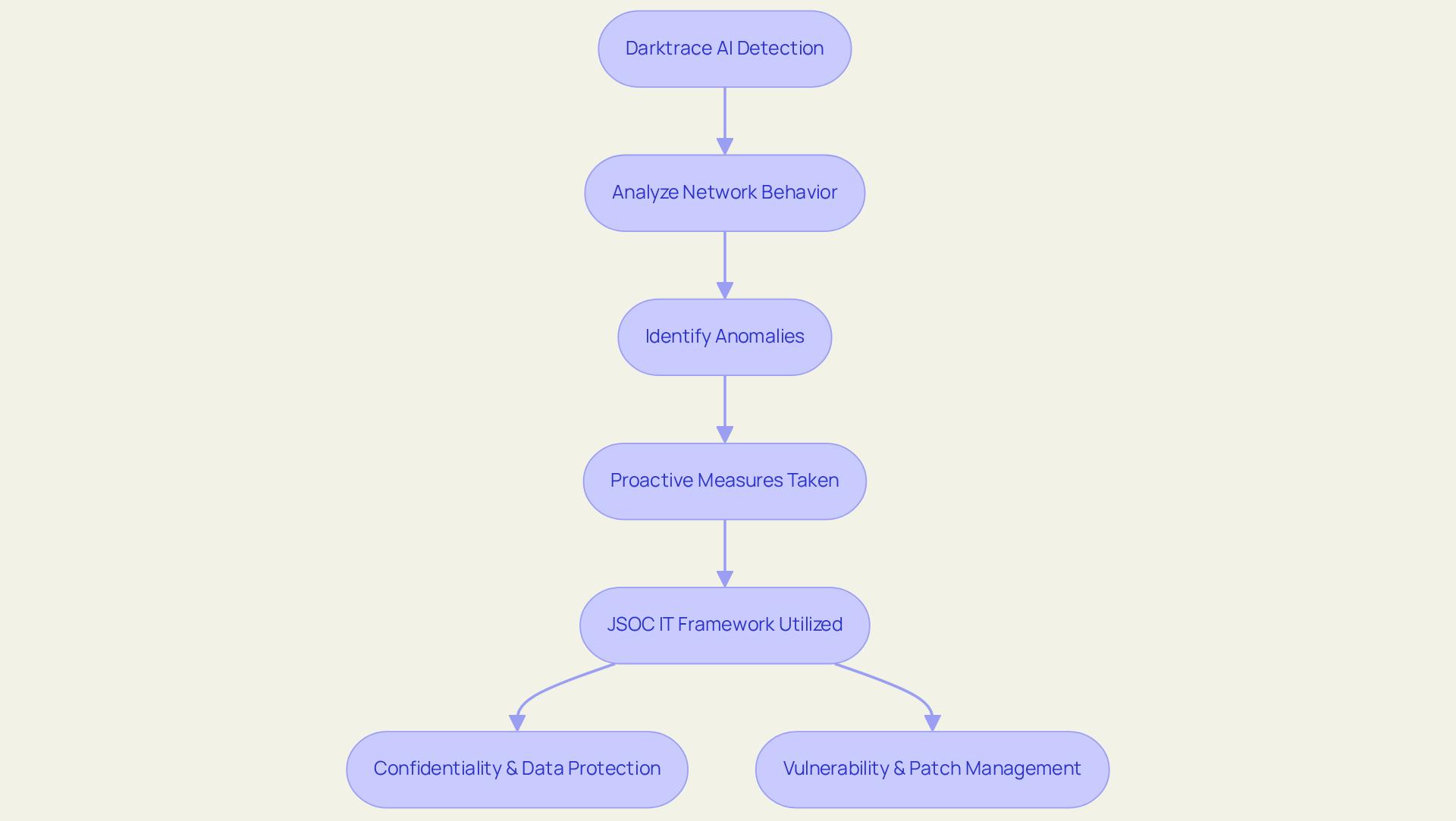
Darktrace employs advanced machine learning algorithms to establish a robust 'immune system' for networks, enabling real-time detection and response to threats. By consistently analyzing network behavior, Darktrace employs real-time threat detection solutions to identify anomalies that may signal cyber threats, allowing organizations to take proactive measures before any damage occurs. This cutting-edge approach proves particularly effective against sophisticated attacks that frequently bypass traditional security measures.
To further bolster their cybersecurity stance, organizations can utilize the provided by JSOC IT. This framework not only guarantees confidentiality and data protection but also encompasses a strong vulnerability and patch management policy that addresses potential system weaknesses. By merging JSOC IT's customized support and proactive threat management with Darktrace's capabilities, businesses can scale securely while upholding a formidable defense against evolving cyber threats. This collaboration empowers companies to focus on growth strategies without compromising their protective measures.
BitLyft: Real-Time Threat Detection with User Behavior Analytics
JSOC IT harnesses user behavior analytics (UBA) to rigorously monitor and analyze user actions within organizations. By establishing a benchmark for typical behavior, JSOC IT can swiftly identify deviations that may indicate potential threats. This proactive approach not only enhances but also plays a critical role in mitigating internal risks that are frequently overlooked by traditional security frameworks.
Indeed, 83% of organizations reported experiencing at least one insider attack in the past year, highlighting the urgency of addressing these threats. The integration of UBA empowers organizations to respond rapidly to anomalies, significantly reducing the risk of insider attacks. Companies that implement UBA have reported enhanced incident response times, with organizations facing 11-20 insider attacks seeing an increase in reported incidents from 4% to 21% over the last 12 months. This illustrates the tangible benefits of this innovative technology in today’s intricate cybersecurity landscape.
Furthermore, continuous monitoring and adherence to robust policies, such as incident response strategies and risk assessments, are essential for effective real-time threat detection solutions. Ongoing training regarding internal risks is also vital, as 32% of participants acknowledged that a lack of awareness was a major factor in attacks. By adopting UBA and integrating comprehensive cybersecurity policies, companies not only bolster their defensive posture but also foster a culture of awareness and preparedness.

Cloud4C: Comprehensive Security Guide for Real-Time Threat Detection
JSOC IT presents a comprehensive suite of protection solutions for cloud environments, emphasizing real-time threat detection solutions and response. Their services encompass continuous monitoring and real-time threat detection solutions, along with automated threat intelligence, essential for organizations to promptly recognize and address risks associated with cloud computing. By integrating these solutions, JSOC IT empowers businesses to operate securely within an ever-evolving digital landscape, while effectively managing deal flow and investor communications in compliance with SEC, FINRA, and global data privacy standards. Moreover, the integration across CRM, cloud, and investor reporting platforms enhances operational efficiency and compliance management.
Statistics indicate that Gartner predicts by 2025, 99% of cloud-related failures will rest with the client, primarily due to misconfigurations. This underscores the critical need for continuous monitoring through real-time threat detection solutions and proactive measures in cloud security. Additionally, human error accounts for 88% of all data breaches, highlighting the importance of automated threat intelligence in mitigating risks linked to such widespread issues. Furthermore, 31% of cloud-related breaches stem from misconfigurations or human mistakes, reinforcing the necessity of adopting these practices.
The impact of continuous monitoring on cloud security incidents is profound; organizations that implement these practices experience fewer breaches and improved compliance with regulatory standards. With , the integration of ongoing surveillance becomes increasingly vital. As the digital landscape evolves, companies must prioritize these strategies to safeguard their operations against the growing complexity of cyber threats, ensuring resilience in a perpetually shifting environment.

Concertium: Advanced Real-Time Threat Detection with AI Integration
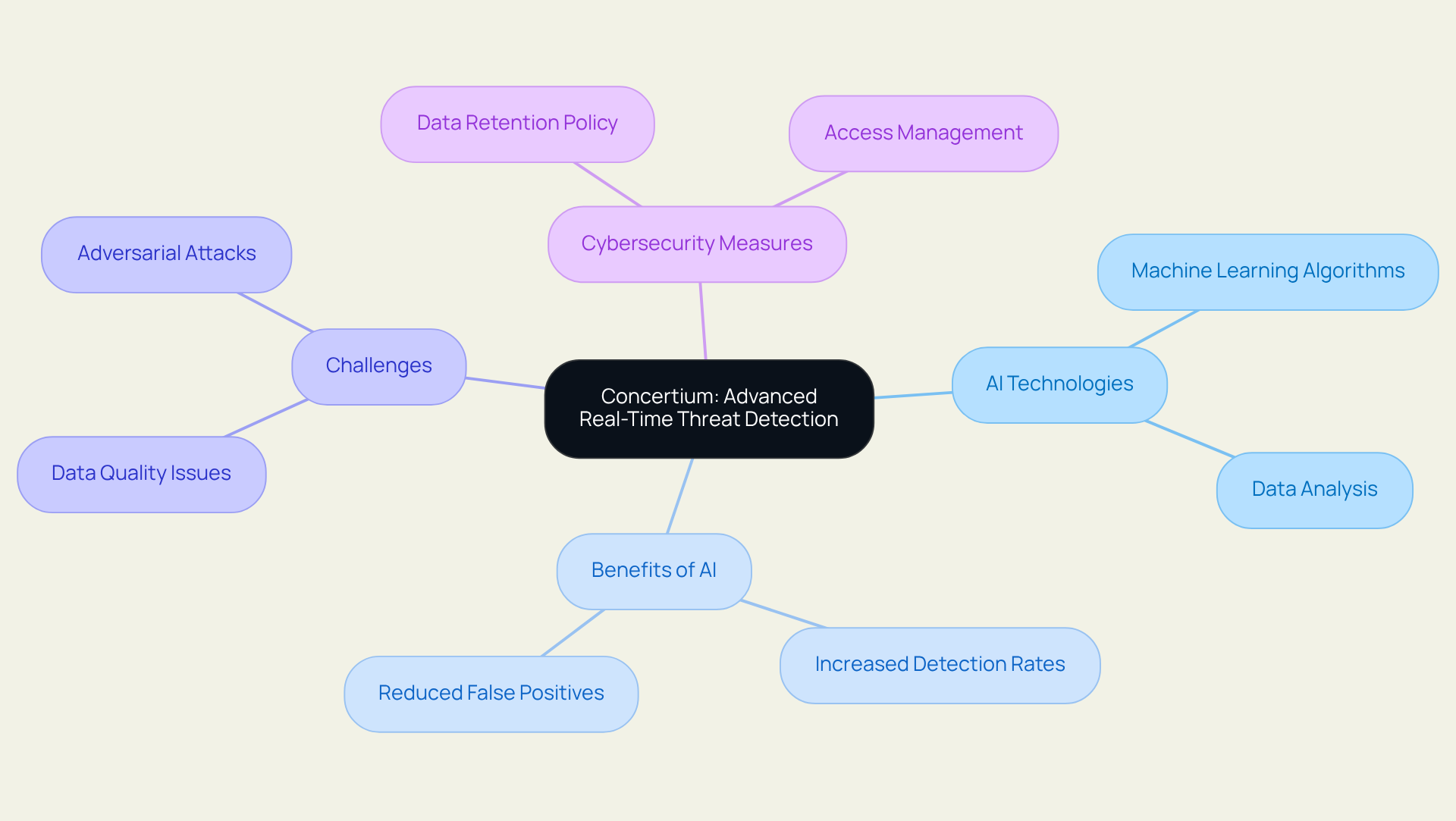
Concertium leverages advanced AI technologies to significantly enhance its real-time threat detection solutions for risk identification. By employing sophisticated machine learning algorithms, the company effectively analyzes extensive datasets, facilitating the rapid detection of potential risks with remarkable precision. This not only elevates detection rates but also minimizes false positives, allowing teams to concentrate on genuine threats and respond with accuracy.
Nevertheless, maintaining human oversight in AI systems is essential to complement automated processes and ensure sound decision-making. Organizations must also confront challenges such as data quality issues and adversarial attacks, which can compromise AI effectiveness. Furthermore, establishing critical cybersecurity measures, including a robust data retention and disposal policy, is vital for strengthening network protection and access management.
By integrating these strategies, alongside JSOC IT's comprehensive cybersecurity framework focused on confidentiality and vulnerability management, organizations can adopt a proactive stance against evolving cyber risks, thereby ensuring the robust protection of their digital environments.
Glesec: Addressing Real-Time Threat Detection Challenges
JSOC IT addresses the pressing challenges of real-time threat detection solutions by delivering comprehensive offerings that integrate a variety of protective tools and technologies. Their strategy underscores the critical importance of continuous monitoring and adaptable protective measures in addressing the ever-evolving landscape of cyber threats. By focusing on real-time threat detection solutions and risk mitigation, JSOC IT empowers organizations to preempt potential attacks. This proactive methodology not only but also fosters resilience against emerging cyber threats.
Clients have reported transformative outcomes, as JSOC IT's customized services have significantly expedited incident response times while ensuring adherence to HIPAA, HITRUST, and FDA standards. Their unwavering commitment to client success is evident; organizations that have adopted these flexible strategies have enjoyed heightened security and peace of mind, enabling them to concentrate on their core business activities.
JSOC IT remains steadfast in its mission to protect patient data while driving innovation within the healthcare sector.

Logic Fortress: Strengthening Cybersecurity with Real-Time Detection
JSOC IT delivers a comprehensive suite of real-time threat detection solutions designed to enhance cybersecurity across various sectors, particularly in healthcare. Their offerings include advanced hazard identification systems, round-the-clock monitoring, risk intelligence, and incident response services, all meticulously crafted to mitigate the impact of cyber risks. The deployment of these solutions not only strengthens a company's security posture but also guarantees a swift response to incidents, effectively minimizing potential damage.
The significance of 24/7 monitoring on incident response is substantial. Continuous monitoring enables the prompt identification of irregularities, allowing organizations to react swiftly before threats escalate. Expert insights underscore that a proactive monitoring strategy is essential in today’s complex risk environment, where cyber incidents can unfold rapidly.
By 2025, cybersecurity incident response strategies have evolved to become increasingly sophisticated, mirroring the growing acknowledgment of incident response as a governance issue. Organizations are prioritizing structured response protocols that align with over 200 global regulations affecting cybersecurity. This evolution highlights the necessity for and proactive risk monitoring, as emphasized in the recent CISA advisory released on September 23, 2025, which stresses the importance of timely patching and thorough incident response planning in maintaining compliance and protecting patient data.
Real-world examples illustrate the effectiveness of incident response solutions in minimizing the impacts of cyber risks. For instance, entities that adopted structured incident response strategies reported significant reductions in breach recovery times and improved compliance readiness. These results underscore the critical role of real-time threat detection solutions and integrated monitoring and response solutions in safeguarding sensitive information and preserving operational integrity.
As Joshua Skeens, CEO of JSOC IT, remarked, "It’s no secret that cyber risks have been increasing in recent years - especially following the pandemic," highlighting the challenges companies face, particularly with the concurrent shortage of IT talent. Furthermore, the exploitation of vulnerabilities, such as the GeoServer Vulnerability CVE-2024-36401, underscores the urgent need for vigilance in identifying risks.
By leveraging cutting-edge technologies and specialized knowledge, JSOC IT empowers organizations to navigate the evolving cybersecurity landscape, ensuring they remain resilient against emerging challenges.

Cyble: AI-Driven Real-Time Threat Detection Solutions
Cyble harnesses AI-powered technologies to deliver real-time threat detection solutions that adapt dynamically to the ever-evolving cyber risk landscape. By analyzing information from diverse sources, their platform identifies potential risks and vulnerabilities, empowering organizations to take proactive measures. The integration of AI significantly enhances both the accuracy and speed of risk identification, allowing entities to achieve a remarkable when utilizing AI-driven cybersecurity solutions. Furthermore, AI bolsters the efficiency of Security Operations Centers (SOC) by 95% and reduces false positives in threat detection by 90%. As cyber threats grow increasingly sophisticated, the ability to swiftly identify and mitigate risks becomes paramount.
Implementing essential cybersecurity controls—such as:
- restricted port configurations
- endpoint security
- complex passwords
- access control policies
is crucial for strengthening network security and access management within integrated service models. Chief Information Security Officers (CISOs) must prioritize these controls to fortify their organization's cybersecurity posture.

ResearchGate: Leveraging Machine Learning for Real-Time Threat Detection
Machine learning is pivotal in developing real-time threat detection solutions, empowering organizations to leverage advanced algorithms for analyzing patterns and anomalies in data. This significantly enhances identification rates and strengthens overall defense mechanisms, allowing organizations to leverage real-time threat detection solutions and respond swiftly to emerging threats.
For instance, the integration of machine learning algorithms, such as Long Short-Term Memory (LSTM) networks, showcases exceptional performance in detecting complex attack patterns with remarkable accuracy and minimal false positive rates.
Furthermore, implementing comprehensive access protection measures—such as intricate passwords, robust access control policies, and unique access IDs—is essential for mitigating unauthorized access and data breaches, thereby complementing the capabilities of machine learning technologies.
Organizations that embrace these technologies not only bolster their risk detection capabilities but also foster a culture of security awareness, ensuring that employees adhere to best practices regarding data access and usage.
Nonetheless, addressing challenges related to data privacy and computational demands is crucial, as these factors can influence the effectiveness of machine learning implementations.
Current trends indicate that the synergy between machine learning and fundamental cybersecurity measures is vital for navigating the increasingly sophisticated risk landscape, emphasizing the necessity for organizations to implement real-time threat detection solutions and continuously innovate and refine their defenses.

Outpost24: The Importance of Timing in Real-Time Threat Detection
In the realm of cybersecurity, timing is paramount. Organizations face an increasingly perilous risk environment, as cyberattacks grow more rapid and sophisticated. JSOC IT emphasizes the importance of real-time threat detection solutions that provide immediate insights into potential risks. Their proactive oversight and swift response strategies have transformed security postures for numerous clients, significantly reducing incident response times and allowing companies to focus on core business activities without the persistent worry of looming threats.
For instance, organizations that detect and respond to threats within 30 days can save over $1 million compared to those that take longer. Moreover, on average, companies take 258 days to identify and contain a breach, granting attackers ample opportunity to exploit vulnerabilities. This stark reality highlights the critical need for to act decisively.
Real-world examples, such as the success stories from JSOC IT, illustrate that prompt detection not only mitigates risks but also strengthens overall security posture. Their comprehensive cybersecurity solutions, tailored to meet the unique needs of various sectors, including healthcare, ensure robust defenses against evolving cyber threats. As these threats continue to advance, leveraging sophisticated threat intelligence tools becomes essential for organizations striving to stay ahead of potential breaches and effectively safeguard their digital environments.

Conclusion
As the cybersecurity landscape evolves, the importance of implementing real-time threat detection solutions cannot be overstated. Organizations face an array of sophisticated cyber threats, necessitating proactive and integrated approaches to safeguard sensitive information. By leveraging advanced technologies such as AI, machine learning, and user behavior analytics, businesses can significantly enhance their ability to detect and respond to potential risks swiftly and effectively.
This article highlights various solutions, including those from JSOC IT, Darktrace, BitLyft, and others, each showcasing unique methodologies tailored to address contemporary cybersecurity challenges. From continuous monitoring and incident response to the integration of AI-driven insights, these strategies not only improve detection rates but also contribute to a more resilient cybersecurity posture. The statistics presented emphasize the tangible benefits of adopting these solutions, such as reduced breach response times and improved compliance with industry regulations.
The urgency for organizations to adopt comprehensive real-time threat detection solutions is clear. As cyber threats become increasingly complex and rapid, investing in robust cybersecurity measures is essential for protecting valuable assets and ensuring business continuity. By prioritizing these strategies, organizations can navigate the intricate cybersecurity landscape with confidence, fostering a culture of awareness and preparedness that ultimately leads to enhanced security and operational integrity.
Frequently Asked Questions
What is the 'Post-Security' model offered by JSOC IT?
The 'Post-Security' model integrates real-time threat detection solutions with incident response, allowing businesses to respond quickly to emerging threats.
How does JSOC IT's monitoring service enhance security?
JSOC IT's 24/7 monitoring services utilize advanced analytics to proactively detect vulnerabilities, significantly reducing the risk of exploitation and ensuring compliance with industry regulations.
What benefits have clients reported from JSOC IT's services?
Clients have experienced a transformation in their security posture, with many reporting a 40% reduction in breach response times, which helps minimize potential damages.
What kind of pricing structure does JSOC IT offer?
JSOC IT offers a flat-rate service with no hidden fees, making budgeting predictable for businesses.
How does Darktrace enhance cybersecurity?
Darktrace uses advanced machine learning algorithms to create a robust 'immune system' for networks, enabling real-time detection and response to threats by analyzing network behavior for anomalies.
What additional support does JSOC IT provide alongside Darktrace?
JSOC IT offers a comprehensive cybersecurity framework that includes confidentiality, data protection, and a strong vulnerability and patch management policy.
What is user behavior analytics (UBA) and how does JSOC IT use it?
UBA involves monitoring and analyzing user actions to establish typical behavior benchmarks, allowing JSOC IT to quickly identify deviations that may indicate potential threats.
What percentage of organizations reported insider attacks in the past year?
83% of organizations reported experiencing at least one insider attack in the past year.
How does UBA help mitigate insider threats?
The integration of UBA allows organizations to respond rapidly to anomalies, significantly reducing the risk of insider attacks and enhancing incident response times.
Why is continuous monitoring and training important in cybersecurity?
Continuous monitoring and adherence to robust policies are essential for effective threat detection, and ongoing training is vital since 32% of participants noted that a lack of awareness contributed to attacks.