Overview
Three essential incident response services are vital for healthcare security:
- Developing a comprehensive incident response plan
- Implementing best practices for effective incident management
- Fostering a culture of security awareness among staff
These services are crucial for protecting sensitive patient data and maintaining operational integrity. The increasing frequency of cyber threats underscores the necessity for structured response strategies to mitigate their impact. It is imperative that healthcare organizations prioritize these services to safeguard their operations and uphold patient trust.
Introduction
In the realm of healthcare, where patient safety and data integrity are paramount, the threat of cyberattacks looms larger than ever. As incidents of data breaches escalate, organizations must prioritize effective incident response services to safeguard sensitive information and ensure uninterrupted care.
With nearly half of healthcare entities experiencing data incidents recently, a pressing question arises: how can these organizations not only respond to but also preemptively manage cyber threats to protect their patients and operations?
This question is not merely academic; it is a call to action for leaders in the industry to adopt comprehensive cybersecurity measures that are both proactive and reactive.
Understand the Importance of Incident Response in Healthcare
In the healthcare sector, the stakes surrounding cybersecurity are exceptionally high. A robust approach to incident response services for healthcare is crucial, not only for protecting sensitive patient data but also for maintaining the continuity of care. Cyberattacks can lead to significant data breaches, operational disruptions, and even jeopardize patient safety.
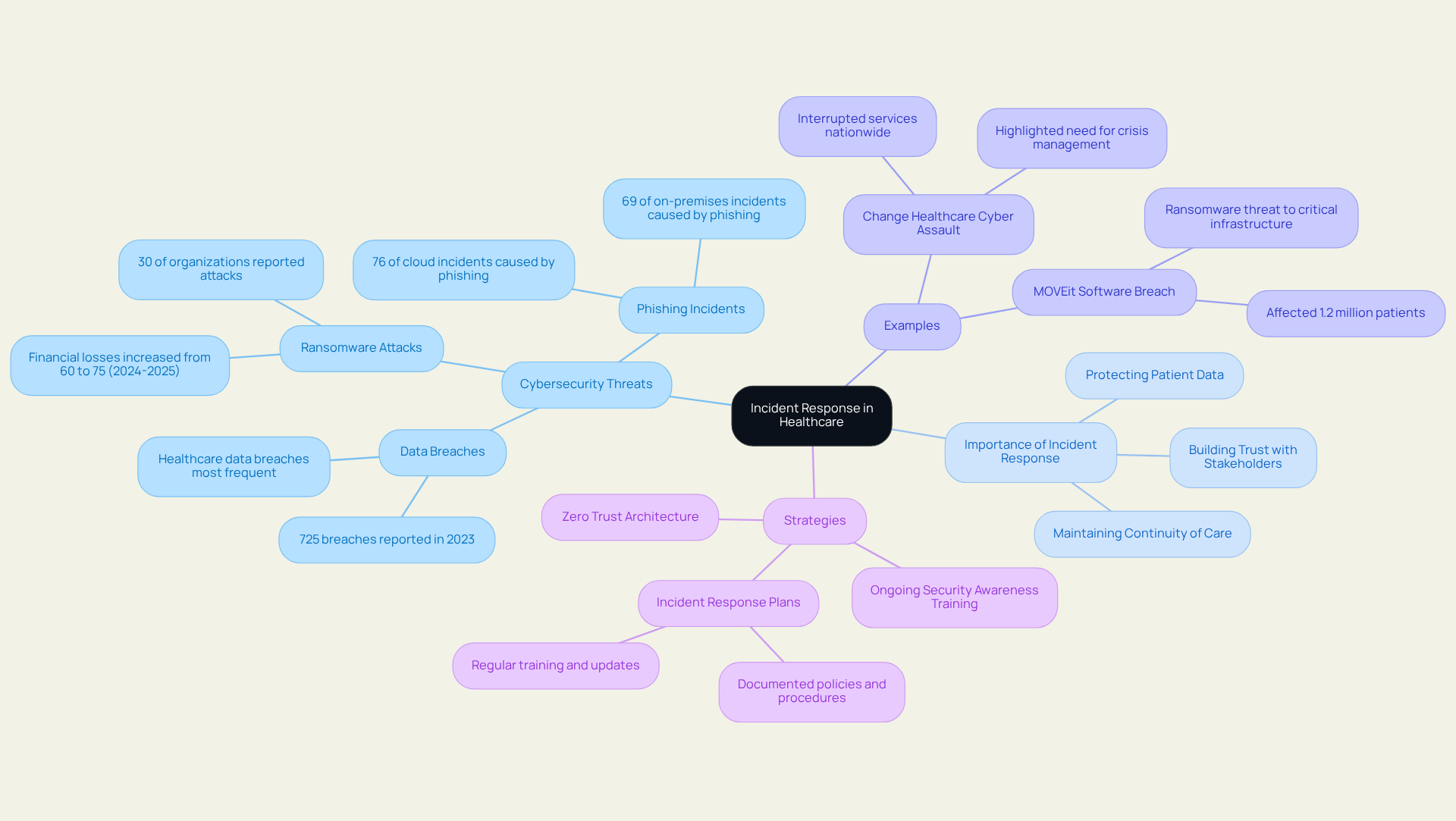
For instance, the 2024 cyber assault on Change Healthcare interrupted services across the country, underscoring the pressing requirement for efficient crisis management systems. By focusing on event management, medical entities can effectively reduce risks, adhere to regulatory standards, and build trust with patients and stakeholders. This proactive strategy is essential in an era where are becoming increasingly frequent; over 725 occurrences were reported in 2023 alone, impacting millions of records.
Moreover, nearly half of medical entities encountered at least one data incident from March 2024 to March 2025, highlighting the essential need for incident response services for healthcare. As cyber threats evolve, implementing strategies such as zero trust architecture and ongoing security awareness training becomes crucial to protect patient safety and maintain operational integrity.
JSOC IT's managed security services provide customized solutions that feature advanced data protection strategies like encryption and stringent access controls, ensuring optimal safeguarding for medical institutions. As Jeff Warren, Chief Product Officer, articulates, 'Attackers are advancing more rapidly with AI, and defenders are rushing to keep pace,' emphasizing the importance of these strategies in light of the challenges faced by medical entities, such as understaffed IT teams and financial constraints.
In summary, a strong approach to managing issues not only enhances compliance and trust but also significantly reduces the risks associated with cyber threats, making it imperative for medical entities to collaborate with specialists offering incident response services for healthcare like JSOC IT.
Develop a Comprehensive Incident Response Plan
Creating a thorough plan for incident response services for healthcare is essential for organizations facing escalating cyber threats. A clearly articulated governance framework serves as the foundation, distinctly specifying the roles and responsibilities of each team member involved in crisis management. This includes designating a coordination leader, communication officers, and technical specialists to ensure efficient collaboration during critical events.
The plan must delineate specific procedures for identifying, reporting, and addressing situations, enabling swift actions when threats arise. Conducting an enterprise-wide risk assessment to evaluate the likelihood versus severity of cyber risks is crucial in this preparatory phase. This aligns with JSOC IT's comprehensive risk assessment strategies, which underscore the importance of identifying vulnerabilities and implementing security controls to effectively mitigate risks, as detailed in the User Manuals, including the Risk Register and Vulnerability Management policies.
Regular training sessions and tabletop exercises are indispensable for incident response services for healthcare, as they familiarize team members with their roles and enhance their readiness to respond effectively. Streamlining these training efforts and conducting regular drills of the Cybersecurity Incident Response Plan (CSIRP) are necessary to ensure that the incident response services for healthcare remain effective and relevant.
Moreover, incorporating guidelines for post-incident analysis is critical for continuous improvement. Documenting occurrences and prioritizing actions are essential elements of the CSIRP, enabling organizations to learn from previous events and refine their strategies. For instance, a medical institution that faced a ransomware attack executed a structured response plan, resulting in a remarkable 50% reduction in recovery time. This scenario illustrates the significant impact that a , including incident response services for healthcare, can have on mitigating the consequences of cyber incidents and enhancing overall security resilience, particularly in light of the increasing frequency of data breaches within the medical field. By aligning with compliance standards such as HIPAA, HITRUST, and FDA, and leveraging JSOC IT's integrated cybersecurity solutions, organizations can further safeguard patient data while fostering innovation.

Implement Best Practices for Effective Incident Management
To enhance event management, healthcare institutions must adopt a range of . Establishing a culture of security awareness among all staff members is crucial. Regular training sessions empower employees to recognize potential hazards and understand the importance of promptly reporting incidents. Statistics reveal that organizations with comprehensive security awareness training programs experience significantly fewer security breaches, highlighting the effectiveness of such initiatives.
Equally important is leveraging technology. Automated event detection and handling procedures, bolstered by tools like Security Information and Event Management (SIEM) systems, facilitate real-time monitoring and notifications, enabling quicker responses to potential threats. For instance, a healthcare provider that implemented automated event detection reported a 40% reduction in response times, illustrating the tangible benefits of integrating technology into event management.
Effective communication channels during a crisis are essential for successful management. Organizations should create predefined messaging templates for both internal and external communications to ensure consistent and accurate information dissemination. This proactive approach not only aids in managing the situation but also helps maintain trust with stakeholders.
Moreover, entities must establish monitoring and testing procedures to ensure the efficacy of their crisis management strategies. Regular assessments of the crisis management plan can identify weaknesses and improvement opportunities, ensuring that the organization is prepared for evolving threats. Finally, conducting routine evaluations and updates of the response strategy is vital to adapt to changing risks and incorporate lessons learned from previous incidents. By fostering a robust security awareness culture, harnessing advanced technology, ensuring effective communication, and implementing comprehensive monitoring and testing protocols, healthcare organizations can significantly enhance their incident response services for healthcare.

Conclusion
A comprehensive incident response strategy is essential for healthcare organizations to protect sensitive patient information and ensure uninterrupted care. The rising frequency and sophistication of cyber threats demand a proactive approach, underscoring the importance of customized incident response services. By collaborating with experts in the field, healthcare entities can bolster their security frameworks, mitigate risks, and cultivate trust among patients and stakeholders.
Key insights throughout the article emphasize the necessity of developing a robust incident response plan. This includes:
- Defining clear roles
- Conducting regular training
- Leveraging advanced technology for real-time threat detection
The discussion also highlights the critical nature of effective communication during crises and the ongoing need for monitoring and evaluating response strategies to adapt to the ever-changing landscape of cyber threats.
Ultimately, the healthcare sector must prioritize incident response services as a fundamental aspect of their security posture. By investing in strong strategies and promoting a culture of security awareness, organizations can not only safeguard patient data but also enhance their operational resilience. The call to action is unmistakable: healthcare providers must take decisive steps to implement best practices in incident management, ensuring they are well-prepared to confront the challenges posed by an increasingly hostile cyber environment.
Frequently Asked Questions
Why is incident response important in healthcare?
Incident response is crucial in healthcare to protect sensitive patient data, maintain continuity of care, and prevent significant data breaches and operational disruptions that could jeopardize patient safety.
What are some consequences of cyberattacks in the healthcare sector?
Cyberattacks can lead to data breaches, operational disruptions, and risks to patient safety, as evidenced by incidents like the 2024 cyber assault on Change Healthcare.
How common are data incidents in healthcare?
Nearly half of medical entities encountered at least one data incident from March 2024 to March 2025, highlighting the frequent occurrence of such incidents.
What strategies can healthcare organizations implement to enhance cybersecurity?
Healthcare organizations can implement strategies such as zero trust architecture and ongoing security awareness training to protect patient safety and maintain operational integrity.
What role do managed security services play in incident response for healthcare?
Managed security services, like those offered by JSOC IT, provide customized solutions featuring advanced data protection strategies such as encryption and stringent access controls, ensuring optimal safeguarding for medical institutions.
What challenges do medical entities face regarding cybersecurity?
Medical entities face challenges such as understaffed IT teams and financial constraints, which complicate their ability to effectively respond to cyber threats.
How can a strong incident response approach benefit healthcare organizations?
A strong incident response approach enhances compliance, builds trust with patients and stakeholders, and significantly reduces the risks associated with cyber threats.